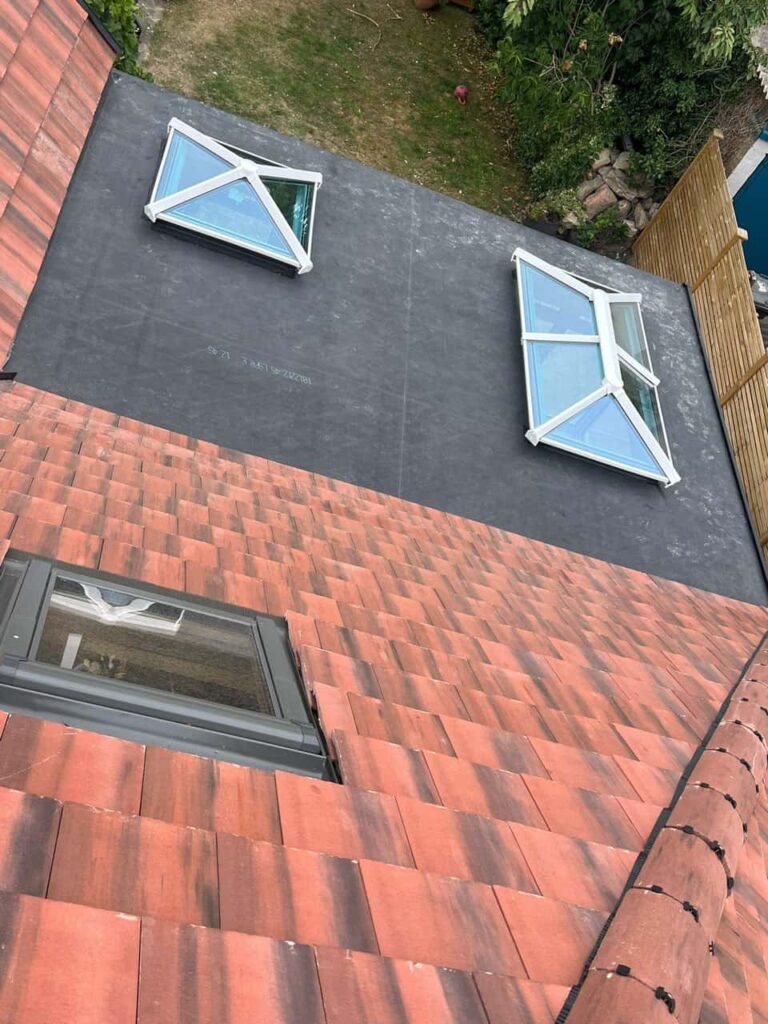
A roof covering is expected to provide a consistent barrier against rain, wind and changing weather conditions. Individual defects can often be repaired successfully, but there comes a point when recurring or widespread deterioration raises questions about the reliability of the covering as a whole.
An older roof does not automatically require replacement. Its condition, repair history and the performance of the supporting materials are more useful indicators than age alone. The following signs suggest that a professional assessment is needed.
How to Recognise an Unreliable Roof Covering
No single symptom confirms that every roof needs replacing. The decision should be based on the pattern of deterioration and whether sound materials remain around the affected areas.
1. Defects Are Appearing Across Several Areas
A cracked tile or a small split in a flat roof may be an isolated problem. Concern increases when similar damage appears across different slopes or sections.
Widespread warning signs may include:
- Numerous cracked or broken tiles
- Slates slipping in separate locations
- Open joints across a flat roof
- Several areas of blistering or splitting
- Loose surface materials
- Repeated defects around different roof edges
When deterioration is distributed across the covering, repairing one area may leave other weakened sections likely to fail later.
2. Water Ingress Keeps Returning
A leak that returns after repairs does not always mean that the work itself has failed. Water may be entering from another point, travelling beneath the covering or exposing a broader weakness that was not previously visible.
Recurring damp patches, staining or dripping during rain should be investigated carefully. The roofer may need to examine tiles or membranes alongside the underlay, battens, flashing and roof junctions.
If water continues entering through different areas, the covering may no longer provide consistent weather protection.
3. Roofing Materials Have Become Fragile
Tiles, slates and flat roofing materials can deteriorate through prolonged weather exposure and repeated temperature changes. They may look reasonably intact from the ground while becoming brittle, cracked or easily damaged when inspected closely.
Signs of material decline can include:
- Tile fragments collecting in gutters
- Slates splitting or breaking around their fixings
- Edges crumbling when disturbed
- Felt becoming hard, cracked or blistered
- Surface layers separating
- Repairs affecting neighbouring materials during access
When large areas have reached a similar condition, continuing to replace individual components may become increasingly unreliable.
4. Repairs Have Created an Inconsistent Patchwork
A roof that has received many local repairs may contain materials of different ages, profiles and conditions. Previous work can remain perfectly serviceable, but numerous patches may indicate that the original covering is declining in stages.
An inconsistent roof may contain:
- Several separate repair areas
- Mismatched tiles with unsuitable overlaps
- Multiple layers of surface sealant
- Repaired seams beside ageing materials
- Junctions altered during different phases of work
- New defects developing next to older repairs
The number of repairs is not the only consideration. Their distribution and the condition of the materials between them determine whether further local work remains practical.
5. Tiles or Slates Keep Moving
Repeated movement can indicate more than an isolated slipped tile. The covering depends on sound nails, clips, battens and correct overlaps to remain secure.
If tiles or slates move across several areas during ordinary windy conditions, the fixings or supporting materials may have deteriorated. Repositioning the visible units may provide only temporary improvement if the cause lies beneath them.
A professional assessment can establish whether the movement is confined to one section or reflects a wider failure within the roofing system.
6. Several Roof Details Are Deteriorating Together
A dependable roof relies on more than its main covering. Ridges, hips, valleys, verges, flashing and penetrations must all direct water correctly.
If the covering is worn and several adjoining details are also failing, isolated repairs may no longer restore consistent performance. Warning signs include:
- Loose ridge or hip tiles
- Deteriorated mortar across multiple areas
- Cracked or displaced flashing
- Corrosion or splits within valleys
- Open edges and failing verge details
- Damage around rooflights or other penetrations
A combination of faults often indicates that the roof should be considered as a complete system rather than as a collection of unrelated defects.
What a Professional Roof Assessment Should Examine
A reliable assessment looks beyond the most obvious damaged area. It should consider:
- The proportion of sound covering that remains
- The condition of the underlay and battens
- The security of fixings
- Evidence of moisture within the roof space
- The stability of the supporting structure
- The performance of valleys, flashing and edges
- The type and history of previous repairs
- Whether defects are localised or widespread
This information helps determine whether targeted repair, broader refurbishment or replacement is the most suitable response.
When Repair May Still Be Appropriate
Even an older roof can remain serviceable if most of its materials are sound. Repair may be the appropriate option when damage is limited, the underlying support is stable and previous work has performed reliably.
A roof should not be replaced simply because one tile has slipped or one leak has appeared. The important question is whether the defect can be corrected without leaving a broader pattern of deterioration unresolved.
Why Early Assessment Matters
Waiting until several active leaks develop can allow moisture to affect concealed parts of the roofing system. By arranging an inspection when defects begin to recur, property owners gain a clearer understanding of the roof’s remaining condition.
Early assessment also allows any necessary work to be planned methodically rather than in response to a sudden failure.
Conclusion
A roof covering may no longer be dependable when defects are widespread, water ingress repeatedly returns, materials have become fragile, repairs form an extensive patchwork, components keep moving or several roof details are deteriorating together.
TRP Roofing Barton-upon-Humber provides professional roof inspections, repairs and replacement services in Barton-upon-Humber, Lincolnshire. If you are uncertain whether your existing covering can still be repaired reliably, contact us to arrange an assessment and receive guidance based on its condition.
Call us on: 01652 241 127
Click here to find out more about TRP Roofing Barton-upon-Humber
Click here to complete our contact form and see how we can help with your roofing needs.